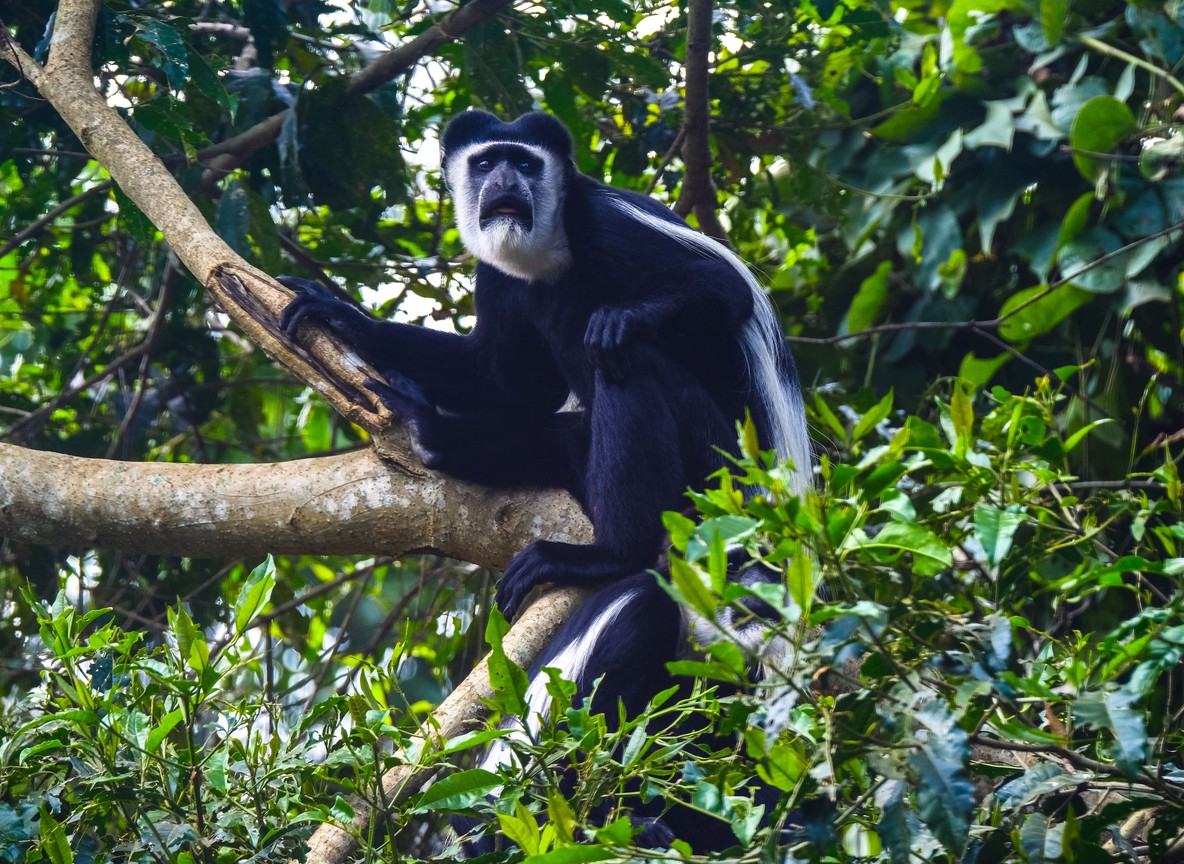
As of 2026, yes, Kenya has monkeys at several dedicated reserves beyond its Big Five safari parks. Kakamega Forest’s 45 km2 core reserve hosts blue monkeys, red-tailed monkeys, black-and-white colobus, and the rare De Brazza’s monkey. Saiwa Swamp National Park, Kenya’s smallest national park at about 2.9 km2, is the country’s most reliable spot for De Brazza’s monkey, while Aberdare National Park’s 766 km2 of forest offers near-guaranteed colobus sightings at its tree lodges.
Why Kenya’s Primates Deserve Their Own Itinerary
Kenya is not a great ape destination the way Uganda or Rwanda is. There are no wild chimpanzees or gorillas here. What Kenya does have is a run of monkey species tied to specific, often small, forest and wetland habitats that most safari circuits bypass entirely. Seeing them means routing your trip toward a handful of named reserves rather than hoping for a lucky sighting on a game drive built for something else.
That distinction matters for planning. A primate-focused stop is usually a add-on leg, not a full week, since most of these sites sit outside the classic savanna parks. Build it around Nairobi as a hub and the logistics stay manageable.
Kakamega Forest: Kenya’s Last Rainforest Remnant
Kakamega Forest, in western Kenya near the town of Kakamega, is the last surviving fragment of the rainforest that once stretched from West Africa across the continent. The Kakamega Forest National Reserve core covers roughly 45 km2, inside a wider forest ecosystem of around 238 km2 once you include community and Kenya Forest Service blocks.
The primate list here is the longest in the country. Guides regularly point out blue monkeys, red-tailed monkeys, black-and-white colobus, and the nocturnal potto, a slow-moving relative of the lemur that is easy to miss without a torch and a patient guide. De Brazza’s monkey also turns up in the forest’s wetter pockets, though sightings are less reliable than at Saiwa Swamp.
Where to stay: Rondo Retreat, a converted colonial-era timber estate inside the forest, is the best-known base for forest walks and night primate spotting. Isecheno Forest Station bandas, run through the Kenya Forest Service, are the budget option for the same trails.
Saiwa Swamp National Park: The De Brazza’s Monkey Specialist
Saiwa Swamp National Park, near Kitale in Trans Nzoia County, is Kenya’s smallest national park at about 2.9 km2. Small size is exactly the point. The park was gazetted in 1974 specifically to protect the sitatunga antelope and its swamp forest habitat, and that same habitat is now the most dependable place in Kenya to see De Brazza’s monkey.
De Brazza’s monkeys are shy, riverine forest specialists with a distinctive white beard and orange brow band. They rarely show themselves in open country, which is why a small, walkable park with raised viewing platforms works better for them than a vehicle-based reserve. Saiwa is a walking-only park, no vehicles permitted past the gate, which keeps disturbance low and sightings closer.
Where to stay: Sirikwa Safaris, a working farm and guesthouse near Kitale, runs regular guided walks into Saiwa and is the standard base for visiting primatologists and birders alike.
Aberdare National Park: Colobus at the Waterhole
Aberdare National Park sits in the central highlands, roughly 160 km north of Nairobi, and covers about 766 km2 of moorland and dense montane forest. It is best known for its tree lodges, where guests watch wildlife come to a floodlit waterhole through the night.
Black-and-white colobus monkeys are a near-guaranteed sighting in the forest canopy around both of the park’s classic tree lodges, and troops regularly move through camp grounds at dawn. The colobus here is the eastern black-and-white colobus, identifiable by its long white tail plume, a striking contrast against the dark forest.
Where to stay: The Ark and Treetops are the two historic tree lodges built directly over the waterhole circuit, both reached via a short transfer from the Aberdare Country Club at Mweiga.
Shimba Hills: A Coastal Forest Option Near Diani
Shimba Hills National Reserve, about 33 km from the Diani beach strip and roughly 55 km south of Mombasa, covers around 192 km2 of coastal rainforest. It is better known for the rare sable antelope, but its forest also holds Sykes’ monkeys and vervet monkeys in good numbers, making it a workable add-on for travelers already based at the coast rather than inland.
The appeal here is convenience rather than rarity. If your trip is coast-anchored, Shimba Hills lets you fold in a forest primate walk without a long inland detour.
Comparing Kenya’s Primate Sites
| Site | Primary primates | Park/reserve size | Best base |
|---|---|---|---|
| Kakamega Forest National Reserve | Blue monkey, red-tailed monkey, black-and-white colobus, potto, De Brazza’s monkey | approx. 45 km2 core reserve (238 km2 wider forest) | Rondo Retreat |
| Saiwa Swamp National Park | De Brazza’s monkey, sitatunga | approx. 2.9 km2 (smallest national park in Kenya) | Sirikwa Safaris, Kitale |
| Aberdare National Park | Black-and-white colobus | approx. 766 km2 | The Ark, Treetops |
| Shimba Hills National Reserve | Sykes’ monkey, vervet monkey | approx. 192 km2 | Coast-based, day trip from Diani |
Getting There: Distances, Times, and Fees
Planning around primates means smaller parks and slower roads than a Mara circuit. Confirm current fees directly with KWS or the site operator before travel, since reserve fees change without much notice.
| Route | Distance/time from Nairobi | Indicative entry fee (non-resident) |
|---|---|---|
| Nairobi to Kakamega Forest by road | approx. 415 km, 7-8 hrs drive | indicative $20-25 per day, Kenya Forest Service managed |
| Nairobi to Kisumu by air, then Kakamega by road | approx. 45 min flight, then 50 km/1 hr drive | flight indicative $90-150 one-way per person |
| Nairobi to Saiwa Swamp (via Kitale) by road | approx. 380 km, 6-7 hrs drive | indicative $20-25 per person, KWS gate |
| Nairobi to Aberdare National Park by road | approx. 160 km, 3 hrs drive | indicative $60-75 per day, KWS gate |
| Diani to Shimba Hills National Reserve by road | approx. 33 km, 45 min drive | indicative $22-25 per person, KWS gate |
Best Time of Year for Primate Sightings
Primates are active year-round, unlike migratory herds, so timing matters less than it does elsewhere in Kenya. That said, the dry months, roughly June through October and again in January and February, keep forest trails at Kakamega and Saiwa Swamp easier to walk. Heavy rain from March through May turns the paths at Saiwa Swamp muddy, and the raised boardwalks can flood in the wettest weeks.
Early morning is the best window at every site on this list. Colobus and blue monkeys are most active feeding in the first two hours after sunrise, before the day heats up and troops move deeper into shaded canopy.
What Guides Look for on a Primate Walk
A vehicle-based game drive trains a guide to scan open ground. A primate walk trains a guide to scan up. Good forest guides listen first, since colobus and blue monkey troops are often heard, branches shaking and alarm calls carrying, well before they are seen. At Saiwa Swamp, guides work the raised platforms in a slow rotation rather than walking continuously, giving shy De Brazza’s monkeys time to settle before they show themselves along the swamp edge.
Explorer Notes
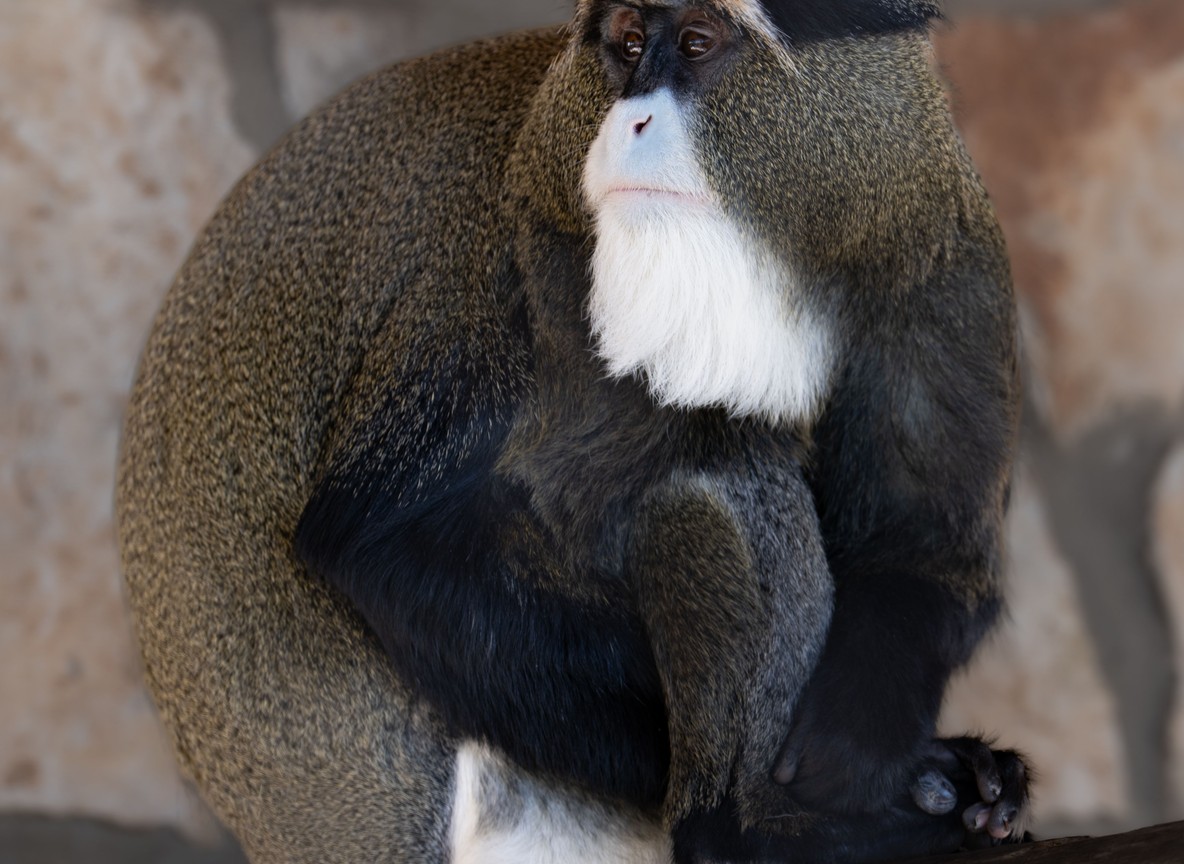
Guides at Saiwa Swamp say the platforms facing north, closer to the swamp’s papyrus edge, produce more De Brazza’s sightings than the ones nearer the main gate, simply because foot traffic there is lighter. At Kakamega, ask specifically for a night walk with a spotlight if you want the potto. It is nocturnal and almost never seen on standard daytime forest walks. Pack sturdy closed shoes for both sites. Saiwa’s boardwalks get slick after rain, and Kakamega’s forest floor holds moisture even in the dry season.
FAQ
Where can I see De Brazza’s monkeys in Kenya? Saiwa Swamp National Park near Kitale is the most reliable site. The park was created specifically to protect swamp forest habitat that suits the species.
Does Kenya have wild chimpanzees or gorillas? No. Kenya has no wild great apes. Primate sightings here focus on monkey species such as colobus, blue monkey, red-tailed monkey, and De Brazza’s monkey.
Which Kenyan park has the most primate species? Kakamega Forest National Reserve has the widest range, including blue monkey, red-tailed monkey, black-and-white colobus, potto, and occasional De Brazza’s monkey sightings.
Can I combine a primate stop with a Masai Mara safari? Yes, though it adds travel time. Aberdare National Park is the easiest add-on, at roughly 3 hours from Nairobi, and can slot before or after a Mara leg without major rerouting.
Is Saiwa Swamp National Park walkable for families? Yes. The park is small, under 3 km2, walking-only, and uses raised boardwalks over the wetter sections, which makes it manageable for most fitness levels.
Kenya’s primates will not fill a two-week itinerary on their own, but a well-placed stop at Saiwa Swamp, Kakamega, or Aberdare adds a layer most first-time visitors never see. Check our Tour Packages page for routes that fold a primate leg into a wider Kenya circuit, or ask a partner operator to build one around your existing dates.
Further reading
More safari planning resources
- Kenya national parks map from Valley Safaris
- Big Five safari parks guide on Touring Insights
- Diani Beach guide on FindMySafari
- Nairobi to Maasai Mara route guide from Valley Safaris
Related guides: Where to See Leopards in Kenya: Best Parks and Timing.